What Does, Out-the-Door Price, Really Mean When Buying a Car?
The out-the-door price is the final, all-in amount you’ll pay to purchase your car, truck, or SUV—including taxes, fees, and dealer charges.

When it comes to buying a new or used car, numbers can be deceiving. You might see a low sticker price advertised online or hear a smooth-talking salesperson quote an affordable monthly payment. But if you’re not asking for the out-the-door price, you’re only hearing part of the story.
The out-the-door price is the actual total cost you’ll pay to take your new vehicle home—no surprises, no extra paperwork fees, and no add-ons tacked on at the last minute. In this article, we’ll break down what it includes, why it matters, and how you can use it to avoid overpaying at the dealership.
Key Takeaways
- Request OTD Quotes: Ask for out-the-door prices to see the real cost.
- Compare Itemized Fees: Be aware of unnecessary add-ons that can inflate the price.
- Negotiate the Total: Focus on lowering the OTD, not just monthly payments.
That’s why it’s important to shift your focus away from just MSRP or monthly payments and consider the entire picture.
Dealers often use low upfront numbers to lure buyers in, then stack on extras that inflate the final cost. Understanding and negotiating based on the out-the-door price puts you in control—and helps ensure you’re not paying more than you should.
Car Buying Tip: In the market for a new car? Always request dealer quotes in your local area to compare real, total costs—not just sticker prices.
What Is the Out-the-Door Price?
The out-the-door (OTD) price is the complete, final price of a vehicle, including all taxes, registration fees, and dealer charges. It’s the number that reflects what you’ll pay, either in cash or through financing, before you drive off the lot. The OTD price is just one of the dealer price terms you need to know as a car dealer, as it reveals the complete financial picture—no hidden fees or last-minute surprises.
Unlike the MSRP (manufacturer’s suggested retail price) or the negotiated vehicle price, the OTD price includes every cost associated with the sale. This is the number you should base your budget and your deal comparisons on.

What’s Included in an OTD Price?
Here’s what’s typically included in an out-the-door quote:
- Vehicle purchase price (negotiated sale price or MSRP)
- Sales tax (varies by state and local jurisdiction)
- Title and registration fees
- Dealer documentation fees (Dealer doc fee)
- Destination or delivery charges
- Optional add-ons (paint protection, window tint, VIN etching)
- Warranties and service contracts (if selected)
Pro Tip: Not every dealership includes all these line items unless you specifically ask. Always request a written breakdown of the OTD price.
Why the OTD Price Matters More Than Anything Else
Too many buyers focus on the wrong numbers—monthly payments, interest rates, or MSRP—and lose sight of what they’re paying in the end. The OTD price helps you:
✅ Avoid hidden fees that inflate the cost
✅ Compare deals fairly across different dealerships
✅ Negotiate with confidence by focusing on the bottom line
✅ Set a realistic budget without last-minute surprises
Whether you’re paying cash or financing, OTD is the number that matters most.
How to Ask for the OTD Price
Don’t be shy. Dealers hear this question every day from informed buyers. Here’s how to ask:
- “Can you provide me with your best out-the-door price, including all taxes and fees?”
- “Please send a breakdown of your OTD price so I can compare it with other offers.”
- “I’m comparing total out-the-door costs, not monthly payments—can you give me that figure?”
- How to Buy a New Car Below Factory Invoice Price – True dealer cost and the factory invoice price are not the same… dealer cost can be much lower.
- Figure a Fair Profit New Car Offer – How to calculate a fair profit new car offer.
- How to Buy a New Car Online – Not sure where to start? Use my step-by-step guide on how to buy a new car online.
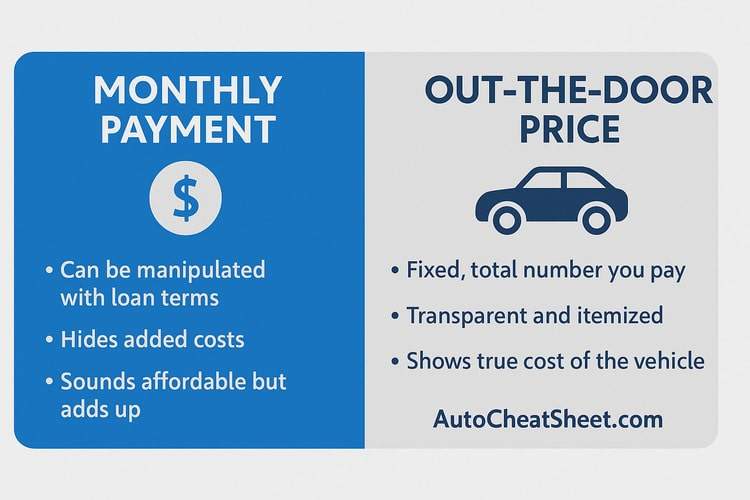
OTD Price vs. Monthly Payment
Dealers often try to shift the conversation toward monthly payments because it gives them more room to stretch the loan, add extras, or bury fees. Focusing on the OTD price keeps you in control.
How to Use the OTD Price to Negotiate
Once you know the OTD price, you can negotiate smarter. Here’s how:
- Request OTD quotes from 3–5 local dealerships (use RydeShopper, Edmunds, or CarsDirect)
- Compare the quotes side by side—look for inflated doc fees or unnecessary add-ons
- Use one quote to leverage another, asking dealers to beat the best offer
- Negotiate downward from the OTD, not from MSRP or payment
Real-Time Bargain Hunting: Turn to Edmunds for instant access to the latest and greatest local deals, saving you time, money, and stress.
Standard Fees That Inflate OTD Prices
Watch out for these common add-ons that may be bundled into the OTD quote:
- Nitrogen tire inflation – adds no real value
- Paint protection/sealant – overpriced and often unnecessary
- VIN etching – can be done yourself for $20
- Market adjustment fees – dealer markup in high-demand markets
- “Dealer Prep” or “reconditioning” fees should already be part of their cost of doing business
Buyer Tip: You have every right to request that these be removed or waived.
What the Out-The-Door Price Doesn’t Include
While OTD is the full transaction cost, it doesn’t include every cost of ownership. Be sure to account for:
- Insurance premiums
- Loan interest (if financing)
- Maintenance and repairs
- Fuel costs
- Registration renewals or state inspections
Frequently Asked Questions
Can I negotiate the OTD price?
Yes—just like the vehicle price, the OTD price is negotiable. Review all line items and push back on inflated or unnecessary charges.
Does OTD include loan interest?
No. It reflects the cost of the car and fees before any financing interest is added.
Is the OTD price the same at every dealership?
Not at all. Dealers set their own prices and fees, so OTD can vary significantly—even for the same car.
How can I get an OTD quote online?
Use tools like RydeShopper, Edmunds, or CarsDirect to request free quotes from local dealers.
What’s the difference between OTD and MSRP?
MSRP stands for Manufacturer’s Suggested Retail Price. OTD is the actual cost you’ll pay, including taxes and fees.
What if the dealer won’t give me an OTD price?
That’s a red flag. Any reputable dealer will provide it. If they refuse, move on to one who will.
Conclusion: What the OTD Price Means
The out-the-door price is the only number that matters when buying a car. It’s the final, honest cost you’ll pay—free of fine print, inflated fees, or sales tricks.
If you’re not asking for the OTD price, you’re leaving money on the table. Whether you’re shopping online, visiting local dealerships, or working with a car-buying service, make the OTD price your main point of negotiation, not the sticker or the monthly payment.
Knowing the out-the-door price is your strongest weapon against overpriced deals and surprise charges. Use it, demand it, and walk if you don’t get it.
About the author
 My name is Carlton Wolf, and I’ve been in the car business since 1994, both retail and wholesale. I created the Auto Cheat Sheet to better educate buyers about the deceptive sales practices many dealerships use nationwide. Please understand that not all car dealers are dishonest. However, you never know who you’ll be dealing with, though. I’m willing to share my knowledge and experience with anyone who listens. Keep in mind that I’m a car guy, not a writer.