
The Ultimate Guide on How to Trade in a Car at a Dealership (Updated 2026)

Step-By-Step Guide on How to Trade a Vehicle in at a Dealership.
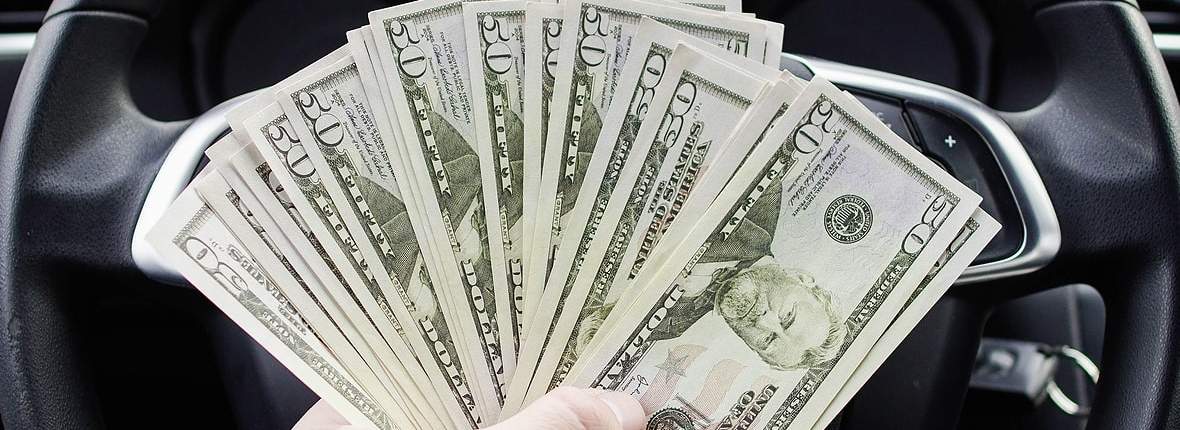
How to trade in a car the correct way at a dealership.

Many people are unsure how to trade a car at a dealership properly. When you purchase a new automobile, you may decide to trade in your old car. If the value of your automobile exceeds the amount owed, you may be able to apply the difference toward the purchase price of a new vehicle. Comparing offers from several dealers will help you receive the most money for your trade-in.

Okay, enough introduction. Let’s Learn How to Trade In a Car the Correct Way!

Step 1) Research your trade’s value.

The first step in trading your car is determining its value before contacting a dealership.

Most automobiles depreciate as soon as you buy them. A website like Edmunds allows you to enter information about your vehicle, such as its make, model, miles, and condition, and obtain a free estimate of its fair market value.

Pro Tip: Have your vehicle identification number available before starting the process. You should also be brutally honest when answering questions on the online appraisal forms. Remember, the goal is to determine your vehicle’s true worth. Before you get any money, someone will physically appraise your vehicle.

Knowing how much your automobile is worth will assist you in determining what a dealer could give for your trade-in and help you negotiate a final price.

Edmund’s free trade-in appraisal tool below will quickly evaluate your vehicle and send you email bids from numerous dealers. These offers are valuable negotiating tools. Be sure to print them out and bring them to the dealership.

The Edmunds free appraisal tool will tell you the value of your trade-in.Powered by Edmunds

Get more values to compare – Once you’ve received your value(s) from Edmunds above.  Get at least one more 3rd party value on your vehicle below.  Additional values will give you an accurate estimate of your vehicle’s worth.

Gather at least one additional trade-in offer from the site below.  (It’s free)

Peddle – Enter information about your vehicle and receive a free, no-obligation offer to buy it.  Learn more about Peddle in my detailed Peddle review.

*Your overall objective is to obtain a couple of offers to get a solid estimate of your trade-in’s worth.

*If you don’t want to deal with the process of trading your car with a dealer, choose the highest offer, and you can stop hereContact the highest bidder, follow their process, and collect your check.

Most car buyers don’t think much about the true value of their trade-in until they’re about to trade in their vehicle.

Dealers know they can make an easy couple hundred (or thousand) dollars by not offering you the true value of your trade-in.  Having a good idea of the actual cash value of your trade before visiting a dealership will keep you from falling victim to the trade-in value car dealer scam.

– Is my personal information safe?

Your personal information is safe with the trade appraisal services I recommend. These companies, as do I, take your trust and privacy very seriously and have the latest industry-standard encryption. They will also never sell your personal information to outside third parties or send you unsolicited emails.

– Will this technique work with leasing also?

Yes!  You still want to know the value of your trade if you are purchasing or leasing a vehicle.  You should always treat trading a car as a separate transaction.

– What if I have two or more cars to trade on one purchase?

All you have to do is repeat the process on each vehicle that you are interested in trading.  Many dealers will take multiple trades on a single purchase or lease.  All you do is add the trade amounts together and then subtract that number from your agreed-upon purchase price.

If you have questions or need more information, here are the resources to help you through step #1.

What’s your trade-in worth? Find out your vehicle’s trade-in value before visiting a car dealership.

Peddle review – Peddle will make an online offer to buy your automobile, and if you accept, they will come to you and exchange a check for your vehicle.

Estimating your trade’s value – Bargaining with a dealer on a car trade-in can be irritating, but these hints will help level the playing field.

Now that you have a few online appraisals and have a reasonable estimate of your trade’s worth.  It’s time to proceed to STEP #2.

Step 2) Do you owe money on your trade?

If you have already paid off the vehicle, skip this section and go to STEP #3.

If you are still paying on your current vehicle, you must determine its current payoff. If you owe less than what it’s worth, you’re in good shape and can use the money to purchase a new car.

If you owe more than your vehicle’s worth, you will be considered upside down on your auto loan and have negative equity. Negative equity occurs when you owe more on your automobile than it is worth. You may still be able to trade in your car in these instances.

Although I don’t advise it, the outstanding sum on your old vehicle loan may be transferred to your new automobile loan, increasing your monthly payment and perhaps putting you further in debt.

You may be able to find this information online through your account with the lender.

You can also call your lender to find this information:

  1. Call the lender of your current car loan.
  2. Today’s payoff on your current car loan is $13,923.65.
  3. The daily per diem on your car loan is $3.46 a day.
  4. $3.46 x 10 days = $34.60 or $3.34 x 20 days = $69.20.
  5. If the dealer wants a 20-day payoff they would add $13,923.65 + $69.20 = $13,992.85.
  6. $13,992.85 would be the 20-day payoff on your trade-in.

Where a lot of people get tripped up is when they’re offered a certain amount for their trade but they don’t see the same amount on the contract.

This is normally because there is a payoff amount or negative equity associated with your trade.

Here are three different scenarios when it comes to trading in a car:

No payoff on trade:

$36,000 – Agreed upon purchase price
– $10,000 – Actual cash value of trade
= $26,000 – Trade difference

Has payoff on trade:

$36,000 – Agreed upon purchase price
– $10,000 – Actual cash value of trade
+ $7,000 – Payoff amount
$33,00,000 – Trade difference

Owes more on trade than the vehicle’s worth (negative equity):

$36,000 – Agreed upon purchase price
– $10,000 – Actual cash value of trade
+ $12,000 – Payoff amount
$38,00,000 – Trade difference

Depending on the amount of negative equity and your credit strength, a dealer may be able to add the difference to the vehicle you’re purchasing.

My advice is to pay the negative equity difference in cash to avoid being in the same situation, or worse, as you are now.

Step 3) Get an appraisal from several local dealers

I will always recommend you sell your car to a private party instead of a dealership. When you sell to a private party, you can list your vehicle for a higher retail price. A dealership will only pay you as close to wholesale market prices as possible, especially if your car is older, has more miles, and has some wear and tear.

You’re on an information-gathering mission to obtain as many “appraisals” on your trade-in as possible to determine its approximate fair market value.

Before approaching dealerships about your trade, ensure you have all the necessary information.

Gather all of your maintenance records in one place. Thoroughly detail your car, change the oil, replace any broken lights, and fix minor paint scratches, chips, or surface damage.

I have several cost-effective tips on how to get the most money for your trade-in, which you can complete on a sunny afternoon.

Here are some tips and strategies for getting dealers to bid on your car:

  • Locate the closest dealerships that sell the same brand of vehicle you’re selling and get their phone numbers. For example, if you’re trading a Toyota Camry, call all the Toyota dealers in the area. They will be the most interested and usually the highest bidders on the vehicle you’re selling.
  • Call each one and ask to speak with the used car appraiser. Ask if they want to buy the year, make, and model of the vehicle you’re selling. Let them know you can bring it to them for appraisal. If they’re not interested in the car, you’ve saved yourself some time.
  • You’re after at least three offers to buy from dealerships. If a CarMax is close to your location, call it as well. A last-ditch effort is to call dealers that are close competitors to the brand you’re selling (e.g., Honda and Nissan).
  • Take your vehicle to the dealerships and let them give you a bid. Make sure you keep good notes so you know who offered what.
  • Let the appraiser know you are shopping your car around to several dealers and are only interested in receiving their best offer to buy your car.
  • Once you’ve received all of your offline and online quotes, you should know your trade-in’s fair market value.
  • Take your best price offer to the dealer where you’re purchasing your can and see if they can beat your best offer. If they can’t beat it, see if they can at least match it so you can take advantage of your state’s trade-in tax credit if available.

When describing your trade-in, you should be as honest as possible. The goal is to get the “true fair market value” so you know what your vehicle is worth and not overstate its condition.

Additional factors include:

  • The vehicle’s age
  • Seasonal timing (Convertibles in the winter)
  • Average wear and tear
  • Mileage on the car
  • Previous accidents
  • Major discrepancies on vehicle
  • The current market for the vehicle (4×4 in a metropolitan area)
  • Reconditioning needed

When determining the actual cash value of the vehicle, all of this information is taken into account.

Need more trade-in tips?  Here are some of the resources to help you through step #3.

The dealership trade-in process – How the appraisal process works in a dealership.

How to increase the value of your trade – Tips and tricks to help you get the most money for your trade.

Selling a junk car online – How to get the most money for a junk car.

Step 4) Negotiate your trade-in with the dealer

Now that you’ve completed the above steps, you’re armed with more than enough leverage to start negotiating your trade-in’s value.  This process is usually done at the dealership, where an appraiser physically appraises your vehicle.

Pro Tip: Do not mention your trade-in until you agree on a purchase price for the car you want. Once you agree on a purchase price, you can say you have a vehicle you wish to trade.

Good salespeople will ask you early in the conversation if you have a vehicle that you would like to trade. If at any time they ask you if you have a trade. Tell them, “I’m not sure if I want to trade my vehicle; all I want to focus on is the price of the vehicle I’d like to buy.”

You do not have to accept the dealer’s initial offer for a trade-in vehicle. You can make a counteroffer with a high trade-in amount. Dealers often start with a very lowball offer. Don’t be offended; this is how they check to see if you’ve done your research.

This is another reason to treat your trade-in as a separate transaction. If you’re trading your car for another car at the same dealer, make sure the price of the vehicle you’re buying does not artificially inflate to compensate for the trade-in amount the dealer is offering on your car.

Before handing your keys over:

  • Never give your only set of car keys to the dealer.
  • If asked how much you believe your car’s worth, always respond, “I have no idea. You tell me.”
  • Your purchase is subject to an acceptable trade-in amount.
  • If the offer is acceptable, you will be sure to give a positive rating on the customer satisfaction survey, which is linked to a car salesman’s compensation plan.

After you receive your initial offer:

  • Don’t be offended. The initial offer will likely be very low. The dealer doesn’t want you to miss an opportunity to purchase your trade-in cheaply if you haven’t researched.
  • If the offer does not match your best estimates, show them a copy of your highest offer. Tell them that if they cannot beat the offer, you will go to the other dealer, sell your car, and return. Most dealers will not want you to leave and will beat or match your offer.
  • If the dealer will not beat or match your highest appraisal offer. Leave the dealership and sell your car to one of the other 3rd party buyers, and then come back to buy the vehicle later. Remember, you will not benefit from any tax savings that may be available from trading in a car. You can ask your car salesperson about the tax benefits for trading and then decide.

Step 5) Make the deal

Once you have agreed on the transaction price, make the deal. If you purchase a new car from a dealer and receive a trade-in price credit, make sure the contract clearly states that the trade-in amount has been deducted correctly from the new car price amount.

If you sell your car to a dealer but don’t buy a new one, you should collect the total value of your trade-in when you hand it over.

This process can be time-consuming, but it helps you get the most out of your money in car transactions. After all, it can be worth a few hundred or even thousands of dollars.

Pros vs. cons of trading your vehicle

Trading your car has advantages and disadvantages. You can decide whether to trade your vehicle or sell it yourself, depending on your financial situation.

Pros

  • Convenience –  You take your car to the dealer and let them handle everything. The dealer will save you time and any unforeseen frustration.
  • Legal documents and paperwork – One of the benefits of dealing with a dealer is that they will complete all the legal documents and transfer ownership to the vehicle’s new owner.
  • The transaction is safe – You don’t have to worry about finding a personal buyer for your car and planning an inspection or test drive with people you don’t know.
  • Possible tax credit – If you live in a state that imposes sales tax on new car purchases, you can only pay sales tax on the difference between the trade-in price and the price of the purchased car.
  • Paying off your current loan – If you owe money to your car dealer, the dealer will pay off your current loan with your lender.

Cons

  • Less money – You can sell your vehicle at retail prices (or a little lower) if you sell it yourself, but you will only get the wholesale price if you sell it to the dealer.
  • It can be confusing – Dealers usually combine your trade-in offer with a lease or purchase offer and loan terms, so knowing how much you get for your deal can be confusing.
  • Recent maintenance costs – If you’ve recently had a tune-up, replaced your tires, or added aftermarket products, the dealer will not include them in your trade-in price.
  • Supply and demand – As with any transaction, the laws of supply and demand apply. For example, if a dealer already owns 10 Honda Accords, they are unlikely to begin the process with an offer close to the car’s fair market value.

Alternatives to trading in your car

Here are some alternative ways to convert your trade-in to cash.

Sell it privately – You can sell your vehicle privately. This is a more time-consuming procedure that might cost you money. However, you have the best chance of getting the most cash for your automobile. If you own a highly desirable vehicle, I highly recommend selling it privately.

Online auction – You can also sell your car through online auctions like Facebook Marketplace, Auto Trader, eBay Motors, and Cars for Sale. You can sell your car immediately and may get a competitive deal.

Online car selling sites – You can quickly sell your car on sites that pick it up from your location, like Peddle.

How to trade in a car FAQ’s

If you make your minimum car payment, it is suggested that you wait at least three years before trading in your automobile. The vehicle’s depreciation tends to taper down around year three on a five-year loan.

Yes. You can trade in an automobile that has an outstanding loan. Typically, the dealer will pay off the debt.  Although it is not advised if you owe more on the vehicle than it’s worth.  The dealer may add the negative equity to your new loan.

Yes.  Your trade-in value is negotiable.

Research what your vehicle is worth with a free online source such as Edmund Appraisal Tool before ever contacting a dealership. Additionally, detail the car, perform minor repairs, and organize all of the vehicle’s paperwork in one place.

Yes.  Trading a car on a lease is done the same way as trading a car on a purchase.

Yes.  Presentation is everything.  You should also gather all of your service record history.

Congratulations!

Let me be the first to congratulate you on successfully learning how to trade in a car at a dealership.

By investing some time, conducting preliminary research, and following my tutorial on properly trading in your vehicle, you can feel confident that you’re getting the best possible trade-in price within your local area.

Take a moment to pat yourself on the back, and now you can buy that car!

© 2026 Copyright Auto Cheat Sheet | Online Car Buying Guide